
 By
By 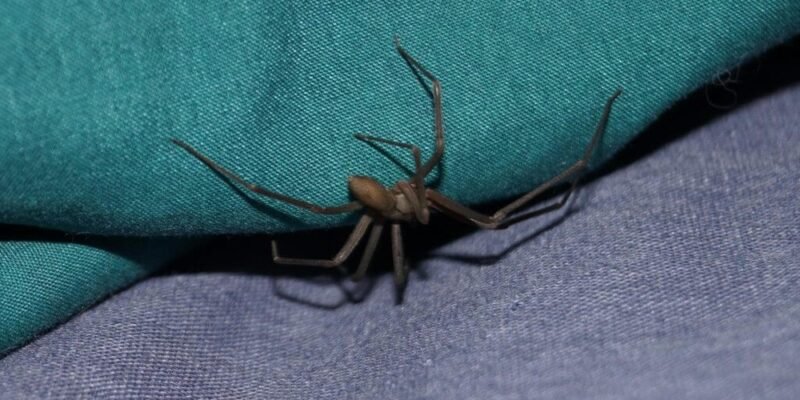
Most Kansas City homeowners find their first brown recluse by accident. A shoe pulled on in a hurry. A folded towel in the basement. A box pulled out of storage for the first time in two years. Missouri sits in the middle of the brown recluse’s natural range, and the Kansas City metro is one of the regions where these spiders show up in homes year-round. The species is shy, not aggressive, and rarely seeks out human contact, which makes most encounters short and uneventful. What separates a single sighting from a real problem is harder to judge without experience, and that uncertainty is one of the most common reasons local homeowners reach out for Kansas City pest control help.
How to Identify a Brown Recluse Versus the Spiders That Look Like One
A lot of spiders get blamed for being brown recluses. Most of them are not. The actual species has several features that distinguish it from the wolf spiders, cellar spiders, and other harmless arachnids that share its color and rough size.
A brown recluse is small, with a leg span typically around the size of a quarter, including the legs. The body is roughly the size of a pea. The color is a uniform tan to dark brown with no banding, spots, or stripes on the legs or abdomen. The legs are smooth and thin, not hairy. The most reliable identification feature, when visible, is a darker violin-shaped mark on the upper section of the body just behind the eyes. The neck of the violin points toward the abdomen. The mark is faint on younger spiders and may be hard to see without good light.
The University of Missouri Extension and the Centers for Disease Control both publish reference images that are worth looking at if you are not sure what you are dealing with. A spider with a banded leg pattern, a hairy body, or a leg span larger than a quarter is almost certainly something else.
Where Brown Recluses Hide in Kansas City Homes
The name fits the behavior. Brown recluses prefer dark, undisturbed spaces. The places they show up in local homes follow a consistent pattern.
Garages and basements are the most common starting point, especially areas with stored boxes, old clothes, or stacks of paper. Crawl spaces and attic storage carry the same risk. Inside the living space, the spiders favor closets, particularly behind hanging clothes, shoes left untouched for months, and the corners of seldom-opened cabinets. Beds against exterior walls and bedding that touches the floor can give them an easy path onto the mattress. Wall voids, gaps behind baseboards, and the spaces underneath furniture pushed flush against the wall all offer the kind of quiet darkness the species looks for.
Outdoors, they hide under wood piles, in sheds, beneath stones, and in the gaps between siding and brick. Items moved from outdoors to indoors are one of the more common entry points, which is why Kansas City homeowners sometimes see a sudden spike after bringing in firewood, holiday decorations, or boxes that were stored in a detached garage.
One Spider Versus a Population
A single brown recluse sighting in a home is not unusual in the Kansas City area, and it is not automatically a sign of an infestation. The question that matters is whether the spider was a wanderer that came in from outside, or whether the conditions inside the home are supporting a breeding population.
A few signals suggest a population rather than a one-time sighting. Seeing the spiders in more than one room or floor of the house. Finding shed skins, which look like papery, hollow spider shapes, in corners or storage areas. Spotting egg sacs, which are off-white and roughly the size of a dime, in undisturbed locations. Encountering spiders during daytime hours, which can indicate that the population is large enough to push activity outside of normal nighttime patterns.
When any of those signs show up, a professional inspection is the right next step. A board-certified entomologist can confirm the species, evaluate the scale of the activity, and identify the structural conditions that are sustaining the population.
Why Bites Deserve to Be Taken Seriously
Brown recluse bites are uncommon, even in homes with significant activity, because the species is not aggressive and only bites when pressed against the skin. Most bites happen when a spider is trapped between a sleeper and the bedding, between a foot and a shoe, or between a hand and a sleeve.
The medical picture varies. Many bites produce mild local irritation that resolves on its own. Others develop into a necrotic lesion that can take weeks to heal and occasionally requires medical treatment. The CDC and the Mayo Clinic both publish guidance for patients on what brown recluse bites look like at different stages and when to seek medical care. The point is not to alarm anyone. The point is that the species is not the same risk profile as a wolf spider or a common house spider, and the response to a confirmed population should reflect that.
What a Professional Inspection Actually Does
A thorough brown recluse inspection looks at more than the rooms where the spiders have been seen. The technician evaluates storage areas, structural entry points along the foundation and roofline, the condition of weather stripping and door sweeps, and the spaces where humidity or warmth might be creating a more hospitable environment than usual. Glue boards placed in strategic locations over the following days give a more accurate picture of how widespread the activity actually is, since brown recluses move at night and are easily missed in a single walkthrough.
Treatment, when warranted, combines targeted application in voids and harborage areas with practical recommendations for reducing clutter, sealing entry points, and changing the conditions that allow the population to persist. The work is not a single visit in most cases. Real elimination takes time, and follow-up monitoring is part of the plan.
When to Call for Kansas City Pest Control Help
A single spider tossed outside is usually not a reason to schedule a service call, though it is a reason to pay attention to what you see over the following weeks. Repeated sightings, shed skins, egg sacs, or a bite that you suspect came from a brown recluse are all reasons to bring in professional help. ZipZap Termite & Pest Control has a board-certified entomologist on staff and has been handling brown recluse cases across the Kansas City metro since 1993. Reach out to schedule an inspection if your situation has moved past a single spider, and find out exactly what is happening in your home before it becomes a larger problem.










Comments