
 By
By 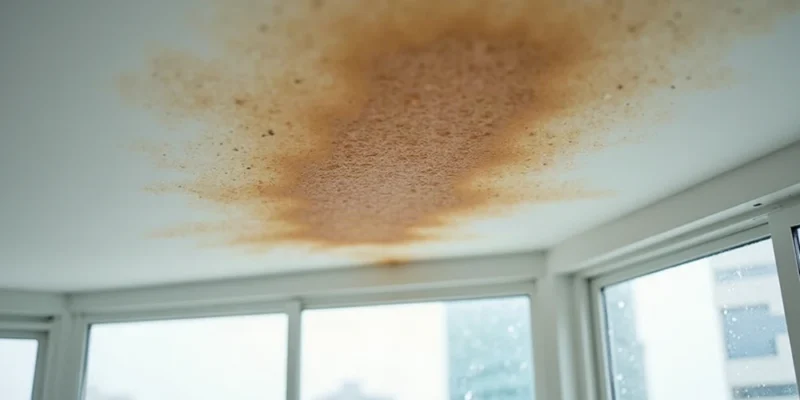
A brown ring appears on the ceiling after a week of heavy rain, and the instinct is almost automatic: the roof must be leaking. For a top-floor unit, that’s often true. For almost everyone else, it’s usually wrong, because the water causing that stain didn’t necessarily fall from the sky at all. It may have travelled sideways through a crack, down from a bathroom floor two storeys up, or along a choked pipe, and arrived at that exact spot on the ceiling for reasons that have nothing to do with roofing.
Roof Waterproofing Only Matters If the Roof Is Actually Where the Water’s Getting In
Investing in roof waterproofing in Singapore makes sense when the roof membrane itself has genuinely failed, cracked, lifted, or worn thin enough to let water through during heavy rain. That’s a real and common problem, especially once a membrane is past its expected service life. The trouble is that a stain on a top-floor ceiling can look identical whether it’s coming from a failed roof membrane above or from a bathroom floor in the unit next to or above that same ceiling, and paying to redo a roof that was never actually the source doesn’t fix anything.
This is exactly why a visual inspection from inside the flat is rarely enough on its own. Tracing a leak properly usually means checking the roof from above at the same time as checking what sits directly above the affected ceiling indoors, since the two investigations point to completely different repairs.
Three Places Water Actually Travels Before It Shows Up as a Ceiling Stain
| Source | How it reaches the ceiling | Typical fix |
| Roof membrane | Water seeps through a worn or cracked membrane directly above a top-floor unit | Roof waterproofing works |
| Upstairs wet area | Water seeps through worn floor waterproofing in a bathroom or kitchen above | Floor waterproofing in the unit above |
| Choked pipe or gully | Blocked drainage backs up and finds the nearest weak point to escape through | Clearing or replacing the pipework |
A Water Leakage Specialist in Singapore Diagnoses Before Recommending a Fix
This is the actual value a water leakage specialist in Singapore brings to a stained ceiling: a proper diagnosis before any repair is proposed, rather than an assumption based on which floor the stain happens to be on. That can mean a moisture survey, a check of the unit above, or a close inspection of the roof itself, depending on the building’s layout and where the stain actually sits. Skipping that step and jumping straight to a repair is how homeowners end up paying twice, once for a fix that targeted the wrong source, and again for the one that actually works.
Topmost-Floor Leaks Come With Their Own Ownership Question
For HDB flats on the topmost floor, a roof that’s leaking is generally common property, which means it falls to the Town Council rather than the flat owner to arrange and pay for the repair. A leak coming from the unit directly above, by contrast, is usually a matter between the two flat owners, who typically arrange a joint check and split the cost of whatever repair is agreed on. Private landed homes and condominium units follow their own arrangements, often tied to the building’s management or the individual owner’s maintenance responsibilities, but the underlying principle carries over: where the water is actually coming from decides who’s responsible for fixing it, not just which ceiling it happens to stain.
What to Confirm Before Signing Off on Any Leak Repair
- That the diagnosis actually traced the water to its source, rather than assuming based on the stain’s location alone
- Whether the fix falls under the roof, the unit above, or shared pipework, since that affects who should be paying for it
- Whether the repair addresses the moisture source itself, not just the visible patch of damaged ceiling
None of this means every stained ceiling needs an elaborate investigation. It means the stain itself is just a symptom, and the repair that actually lasts is the one aimed at wherever the water started, which isn’t always the ceiling it ended up on.
Tracing a leak to its actual source takes one proper inspection, not a guess based on which floor it shows up on. Contact General Waterproofing & Service to arrange a diagnosis before committing to any repair.









Comments